International Women’s Day – are female carers being taken for granted?
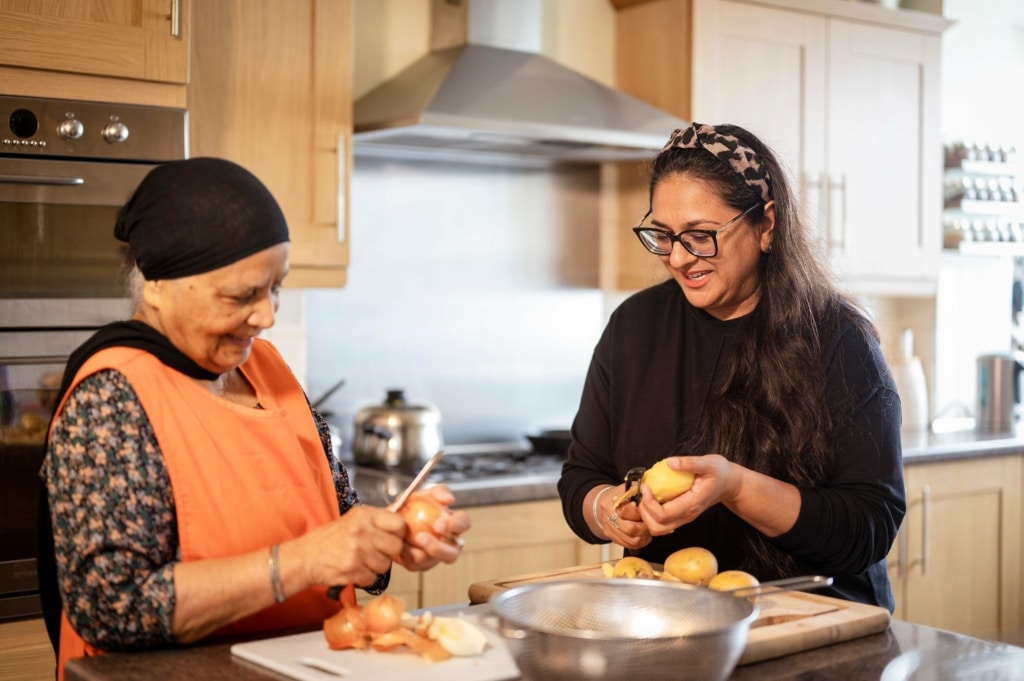
International Women’s Day
Are female carers being taken for granted?
Unpaid female carers are less likely than unpaid male carers to access support from local authorities in terms of advice and information, Carer’s Assessments and funded support, according to our research.
Though there are more unpaid female carers than unpaid male carers according to the 2021 census data, our 2023 survey of 1,300 unpaid dementia carers looking after family members and friends has revealed some stark differences in who men and women are caring for and the support they are receiving.
Looking after a parent
46% of female carers are likely to be looking after a parent compared to 25% of male carers
Finding out about entitlements
41% of male carers have found out from their local authority about information, advice, support or benefits available to them – compared to 27% of female carers
Accessing support
43% of male carers say that they can access the support they need at the time they need it compared to 26% of female carers
Carer’s Assessments
57% of male carers have had a Carer’s Assessment compared to 49% of female carers
87% of male carers have subsequently received a copy of their Carer’s Assessment and support plan compared to 58% of female carers
Support from paid care workers
84% of male carers are receiving support from paid care workers compared to 62% of female carers
Local authority funded support
57% of male carers are receiving local authority funded support compared to 40% of female carers
All carers deserve the support that they need as individuals to cope with their caring responsibilities. Too many dementia carers, regardless of their gender, feel invisible and alone. However, we are concerned about these apparent discrepancies in the support being accessed by female and male unpaid carers. Frances Lawrence, CEO, Dementia Carers Count
Our research shows that over half of male carers feel positive or quite positive about being a carer compared to a third of female carers. Over a third of male carers describe their mental health as good compared to a quarter of female carers. The implied links between how carers feel and the support that they are receiving cannot be ignored.
Our findings prompt reflection on International Women’s Day about the impact of caring and the expectations we all have about men and women caring for family members. We know that providing care to someone else often leads to inequalities in terms of employment and income, with many carers obliged to give up work to fulfill caring responsibilities. We also know that many more women give up work to care than men.
Addressing this is important, but it looks like there is another challenge which we need to urgently tackle – ensuring that those who are caring have equal access to information, advice and statutory entitlements, such as the Carer’s Assessment, as well as paid support. More research is needed to understand why discrepancies are arising and what can be done to change this. Frances Lawrence, CEO, Dementia Carers Count
About Dementia Carers Count
Dementia Carers Count is a small but mighty charity, powered and inspired by dementia carers’ experiences and insights and driven by the urgent need for change. We are here to listen, to support and to help dementia carers. We provide free, personal and confidential practical advice and emotional support. Every day our team of specialist advisors supports carers across the UK. Our Carer Support Line can be reached for free on 0800 652 1102 Mon-Fri 9am-5pm
More Like This
New partnership with Dementia Research UK
We're delighted to have been awarded funding from Dementia Research UK so we can support more dementia carers.

Too many dementia carers are reaching crisis
Our 2025 survey findings are a stark reminder of the relentless challenges faced by dementia carers. Too many are reaching crisis.
Thank you for taking part in our 2025 carer survey
Share your experiences and views in our 2025 survey and help us improve the support available to dementia carers
